K-Medical Tourism Insight
Korea Medical Tourism 2026 - Why 2 Million Patients Chose Korea
Wonmyeong Choe
Head of Communications
August 7, 2026
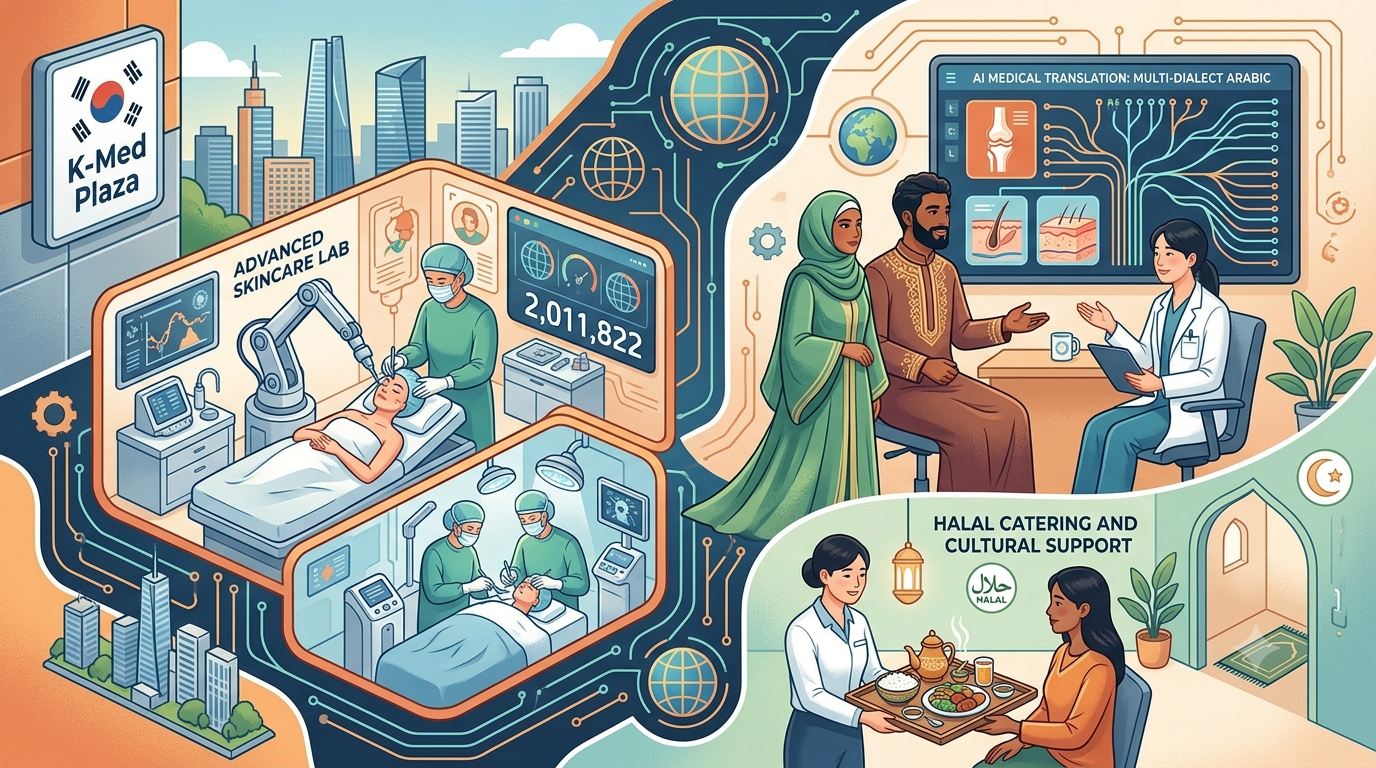
In April 2026, South Korea's Ministry of Health and Welfare published a number that surprised even people inside the medical tourism industry. Korea had welcomed 2.01 million foreign patients in 2025. That is not a rounding error. It is 2,011,822 people who made a deliberate decision to cross a border for medical care in a country that, for many of them, required translation, planning, and a degree of trust that does not come easily.
The question worth asking is not why Korea has become the world's leading medical tourism destination. The numbers speak to that clearly enough. The more useful question is: what has historically stopped more people from going, and what has changed in 2026 that is finally removing those obstacles?
That is what this article is about. And for patients in the Arab world, Southeast Asia, Europe, and beyond who have been curious about Korean medical care but unsure how to actually access it in their own language, with their dietary and religious needs respected, we want to explain exactly how Linkiss and the FaceOn platform make this possible today.
Korea vs Other Medical Tourism Destinations: An Honest Comparison
Medical tourism is not new. Patients have been traveling to Thailand, Turkey, India, and other destinations for decades seeking procedures at lower cost. Korea's rise to the top of this market in 2025 did not happen because it offered the lowest prices. It happened because it offered something more specific: consistently high clinical outcomes in specialties that matter most to international patients, combined with a safety and regulatory environment that gives people genuine confidence.
Here is how Korea compares to the destinations patients most commonly consider:
Korea vs Thailand
Thailand has been one of the most popular medical tourism destinations in Asia for a long time, and the country does many things well. It has excellent hospitals in Bangkok and Phuket, strong English-language support, and an established infrastructure for international patients. Where Korea consistently outperforms Thailand is in the quality and depth of specialist training, particularly in dermatology, non-surgical aesthetics, orthopedics, and oncology. Korean specialists typically complete more rigorous post-graduate training in their subspecialties, and the sheer volume of procedures they perform annually produces a level of technical proficiency that is difficult to match. Korea also has a significantly stronger accreditation environment, with more hospitals holding Joint Commission International certification. For patients seeking the most technically demanding procedures, Korea is the stronger choice.
Korea vs Turkey
Turkey has built a strong reputation in hair transplantation and certain cosmetic procedures, and Istanbul in particular has attracted significant patient volumes from the Middle East and Europe. For the procedures Turkey specializes in, it is a legitimate option. Korea's advantage over Turkey shows up most clearly in dermatology, skin treatment, non-surgical facial procedures, and the aesthetic philosophy that Korean medicine brings to these areas. Korean doctors have developed techniques in treatments like Rejuran, exosome therapy, and ultrasound-based lifting that are not available at the same level elsewhere. For patients from the Arab world who value these specific treatments, Korea offers expertise that Turkey simply does not match. Cost-wise, Korea and Turkey are broadly comparable for many procedures.
Korea vs India
India has world-class medical facilities and has become a major destination for complex medical procedures such as cardiac surgery, cancer treatment, and organ transplants. Korea, while also excellent in these areas, is not primarily positioned as the destination for patients seeking low-cost major surgery. Where Korea sits in a different category entirely is aesthetic and dermatological medicine. India does not have Korea's reputation, expertise, or treatment innovations in these fields. For patients seeking non-surgical skin treatments, facial procedures, or aesthetic surgery, Korea is in a different league. For patients seeking complex oncology care at lower cost, India and Korea can both be strong options depending on the specific cancer type and institutional expertise required.
Korea vs the United States and Europe
This is where the numbers become most striking. A procedure that costs between $25,000 and $45,000 in the US, UK, or Germany can often be accessed in Korea at a fraction of that price, with comparable or superior clinical outcomes. This is not a function of lower standards. Korea's regulatory framework for medical facilities, its specialist training requirements, and its accreditation systems all meet or exceed international benchmarks. The price difference reflects lower overhead, more efficient practice models, and currency dynamics. Beyond procedures, patients who visit Korea can also benefit from the comprehensive medical tourism infrastructure that has developed around the sector, including post-operative recovery facilities, translation services, and coordinated logistics that are simply not part of the experience when receiving treatment domestically in the US or Europe.
In 2025, patients came to Korea from 201 countries. Total spending by foreign patients and their companions reached 12.5 trillion Korean won, equivalent to approximately 9 billion US dollars. That level of patient confidence is earned, not marketed.
What Korean Medicine Actually Excels At
Of the 2.01 million foreign patients who visited Korea in 2025, 62.9% came specifically for dermatology treatments. Cosmetic surgery accounted for 11.2%. These figures matter because they tell you what international patients actually trust Korea to do well, based on real experiences rather than advertising.
Non-Surgical Aesthetic Treatments
Korea is globally ahead in treatments like Rejuran, which uses polynucleotide compounds derived from salmon DNA to repair skin collagen and improve texture from within. This treatment is widely available in Korea with deep clinical experience behind it. Similarly, ultrasound-based lifting treatments, exosome therapy, and skin booster injections are areas where Korean doctors have refined techniques over many years and at very high patient volumes. The results of these treatments in Korea are consistently referenced by patients as the reason they return.
Cosmetic and Reconstructive Surgery
Korean surgeons performing rhinoplasty, eyelid surgery, facial contouring, and anti-aging procedures have an international reputation built on natural-looking results. The Korean aesthetic philosophy prioritizes enhancement that fits the patient's existing features rather than dramatic change. Patients who have undergone surgery in Korea consistently describe results that look like a better version of themselves, not a surgical result. The technical skill behind this comes from genuine volume: Korean surgeons performing specific procedures multiple times per week develop a level of proficiency that lower-volume practitioners cannot match.
Oncology and Internal Medicine
Korea also holds strong positions in cancer care, particularly gastric and lung cancer treatment, where Korean institutions have developed specialized protocols and have significant patient volumes. The country has sophisticated medical screening infrastructure and is a strong destination for full health check-up programs that combine comprehensive diagnostics with treatment if needed.
The Real Barriers to Accessing Korean Medical Care
Understanding why 2 million people chose Korea in 2025 is one thing. Understanding why many more people who wanted to go did not is equally important, because these are the problems that Linkiss was specifically built to solve.
Language
Medical communication is one of the few areas where imprecision can have serious consequences. A patient describing symptoms, a doctor explaining what a procedure involves and what risks exist, a nurse providing post-treatment instructions: these conversations need to be accurate. General translation apps and informal interpreters do not meet this standard for medical contexts.
For patients from Arabic-speaking countries, the language challenge is particularly specific. Arabic is not a single language in practice. A patient from Saudi Arabia and a patient from Morocco speak in ways that can be mutually difficult to understand. Any translation support for Arab patients needs to address dialect differences, not just translate between Arabic and Korean in the abstract.
Trust
How does a patient in the UAE or Indonesia evaluate whether a Korean clinic is reputable before they have ever visited it or spoken to the doctor? How do they know the quoted price is complete and accurate, that the credentials on the website are genuine, and that the treatment recommendation is based on their actual clinical needs rather than on what is most profitable for the clinic? Without a reliable way to assess these questions from home, many patients make the understandable decision to wait.
Cultural and Religious Considerations
For Muslim patients, travel for medical care involves considerations that go beyond language and cost. Halal food during recovery, access to a prayer room or knowing where nearby mosques are, female doctor options where preferred, and sensitivity to Islamic values throughout the clinical experience are not optional preferences. They are requirements that affect whether a patient feels genuinely welcomed and cared for, or merely accommodated.
Korea has become increasingly aware of these needs as patient volumes from Muslim-majority countries have grown. But navigating which clinics and facilities genuinely meet these requirements, versus which merely claim to, is something patients cannot easily do from abroad without trusted guidance.
How Linkiss Removes Every One of These Barriers
Linkiss built FaceOn to address the specific obstacles that have kept patients from accessing Korean medical care that would genuinely benefit them. The platform is not a general telemedicine tool repurposed for medical tourism. It was designed from the beginning around the specific needs of international patients seeking Korean specialists.
Real-Time Multilingual Consultation
FaceOn connects patients with verified Korean specialists via real-time video consultation, with AI-powered medical translation running during the call. The translation system is built specifically for medical contexts and supports Arabic in all its major dialects including Gulf Arabic, Levantine, Egyptian, and North African dialects. It also supports English, Chinese (Mandarin and Cantonese), Japanese, Russian, Spanish, French, and Indonesian.
This means a patient in Qatar, Morocco, Indonesia, or France can sit with a Korean specialist and have a real conversation about their clinical situation without any information getting lost in translation. The specialist hears the patient accurately. The patient understands the doctor's assessment, recommendations, and explanation of any procedure accurately. This is not the same experience as using a smartphone translation app or working through an informal bilingual assistant. The standard is professional medical interpretation quality, delivered through an AI system trained specifically on medical terminology.
Verified Specialists, Transparent Information
Every specialist available on FaceOn is independently verified by Linkiss before they appear on the platform. Credentials are confirmed, clinic affiliations are checked, and specialty areas are accurately documented. Patients can review specialist profiles, see what treatments they focus on, and choose based on their own assessment. There are no referral commissions influencing which doctor a patient is steered toward. The platform is designed to give patients accurate information and let them choose.
Halal-Friendly Treatment and Recovery Support
For Muslim patients, Linkiss provides specific guidance and coordination around the requirements that matter. This includes identifying clinics and partner recovery facilities that provide halal food throughout the patient's stay, facilities with dedicated prayer rooms or locations of nearby mosques, female doctor options for procedures where a female physician is requested, and clinical environments where staff are trained to be respectful of Islamic values and practices. These are not afterthoughts. For Muslim patients considering treatment in Korea, the cultural compatibility of their experience is as important as the clinical quality, and Linkiss treats it accordingly.
As patient volumes from GCC and Muslim-majority countries continue to grow, the medical facilities Linkiss works with have developed genuine competency in meeting these needs. We do not work with facilities that merely claim to be Muslim-friendly without the substance to back it up.
End-to-End Journey Coordination
The consultation is the beginning of the service, not all of it. When a patient decides to travel to Korea after speaking with a specialist through FaceOn, Linkiss coordinates the practical elements of the journey. This includes clinic booking, accommodation near the treatment facility, airport transfers, in-country translation support, and post-treatment follow-up consultations through FaceOn once the patient returns home.
This matters because one of the consistent criticisms of medical tourism has been that patients receive excellent care during their visit but are left without follow-up support once they leave. FaceOn's ongoing consultation capability means patients maintain access to their Korean specialist for monitoring and questions during recovery, wherever they are.
A Practical Look at What to Expect
For patients who have not gone through a medical tourism process before, it helps to understand what the experience actually looks like with Linkiss from start to finish.
Before You Travel: The Consultation
The process begins with a virtual consultation through FaceOn, which patients can access by downloading the app from the App Store or Google Play, or via the website at faceonkorea.com. After creating a profile and describing what they are seeking, patients select a specialist from the verified network and book a consultation at a time that works for their time zone.
During the consultation, the specialist reviews the patient's concerns, asks the clinical questions needed to understand their situation, and provides a preliminary assessment. This includes what approach would be recommended, what the procedure or treatment involves, what results are realistic to expect, and what the full cost would be. Patients can ask questions in their own language throughout.
At the end of this consultation, the patient has everything they need to make an informed decision. There is no sales pressure. If the patient wants time to think, wants to consult another specialist, or decides not to proceed, that is entirely their choice. The consultation fee is a flat rate between 30 and 50 US dollars per session. Nothing about the decision to proceed or not proceed affects that fee.
During Your Stay in Korea
For patients who choose to travel, Linkiss coordinates the full logistics. The clinic appointment is confirmed well in advance. Accommodation is arranged near the treatment facility, with halal food options specified for Muslim patients. Transfer from the airport is coordinated, and translation support is available at the clinic throughout the visit.
Korea's medical facilities serving international patients are well equipped for this kind of coordinated visit. Korea has been actively developing its medical tourism infrastructure, and the facilities Linkiss partners with have dedicated international patient teams, clear communications processes for foreign patients, and experience handling the practical needs that come with treating patients who have traveled from abroad.
After You Return Home
Recovery after medical procedures does not stop when the patient boards a flight. FaceOn's follow-up consultation function lets patients share their recovery progress with their Korean specialist through the platform, receive guidance on what they are observing, and flag any concerns that need attention. This continuity of care at the post-treatment stage is something that most medical tourism experiences historically have not provided well. It is one of the specific things Linkiss was designed to change.
Who Should Consider Linkiss
The short answer is anyone who has been curious about Korean medical care but has felt unsure about how to navigate it. More specifically, Linkiss is built for patients who want:
A specialist consultation with a verified Korean doctor without traveling first
Honest information about whether a procedure is right for them from a clinician with no financial interest in the answer
Treatment in their own language without relying on informal translation or a broker with competing incentives
Halal food, prayer access, and culturally respectful care as part of the experience rather than an afterthought
Follow-up care from their Korean specialist after returning home
The cost advantage of Korean medicine without sacrificing clinical quality or transparency
Linkiss currently serves patients from across the GCC, the wider Arab world, Southeast Asia, Europe, and beyond. The platform supports patients in six languages plus Arabic dialects, and the network of verified specialists spans more than 100 doctors across 11 countries, with the Korean specialist network at its core.
The Bigger Picture
Korea welcomed 2.01 million foreign patients in 2025. Those patients came from 201 countries. They spent collectively around 9 billion US dollars not just on treatment but on accommodation, food, and everything that surrounds a medical visit. Behind every one of those patient journeys was a moment where someone decided that the care available to them at home was not enough, or not affordable enough, or not as advanced as what they knew existed in Korea.
The gap between knowing excellent care exists and being able to actually access it has historically been real and significant. It has been filled by brokers with mixed incentives, by informal word of mouth, and by patients who figured things out through sheer persistence. Linkiss exists to close that gap properly: with verified information, AI-powered language support across Arabic dialects and five other languages, full cultural and religious consideration for Muslim patients, and a complete patient journey from first consultation through post-treatment follow-up.
If you have been thinking about accessing Korean medical care and wondering where to start, the answer is a single consultation. Everything else can follow from there at your own pace.
Download FaceOn on iOS or Android, or begin at faceonkorea.com
+821064912882
A specialist consultation with a verified Korean doctor without traveling first
Honest information about whether a procedure is right for them from a clinician with no financial interest in the answer
Treatment in their own language without relying on informal translation or a broker with competing incentives
Halal food, prayer access, and culturally respectful care as part of the experience rather than an afterthought
Follow-up care from their Korean specialist after returning home
The cost advantage of Korean medicine without sacrificing clinical quality or transparency